

As parents, it is easy to fall into the trap of viewing play as a convenient filler, a way to keep the kids occupied while we answer an email, prep dinner, or simply catch our breath. In a highly scheduled world, "just playing" can sometimes feel like downtime.
But if we look closely at what is actually happening when children engage in self-directed play, a different picture emerges. Play isn't just killing time, it is the fundamental work of childhood development. When children are deep in an activity, they are actively wiring their brains, testing physical limits, and learning how to navigate the complex world of human interaction.
Here is a closer look at the developmental heavy lifting happening right on your living room floor.
The Power of Stepping Back
Modern parenting often comes with the unspoken pressure to be our children's primary source of entertainment. However, one of the most effective ways to support development is to simply step back and let them direct their own play without intervention.
When children play independently, they build critical foundational skills:
- Executive Functioning: They practice formulating a plan, focusing their attention, and seeing an idea through to completion.
- Problem-Solving: When a structural design fails, they have to troubleshoot and pivot without an adult stepping in to fix it for them.
- Self-Reliance: They learn that they are entirely capable of engaging their own minds, which builds deep, quiet confidence.
The Value of the Tactile in a Digital World
Screens are an unavoidable part of modern life, but the cognitive benefits of physical play cannot be replicated by an app.
When children manipulate physical objects, their brains receive immediate, rich sensory feedback. They learn the laws of gravity, spatial awareness, and geometry through the physical weight and magnetic click of pieces in their hands. This tactile engagement grounds them in reality, slowing down the frantic pace of digital consumption and giving their imaginations room to breathe.
A Natural Sandbox for Sibling Dynamics
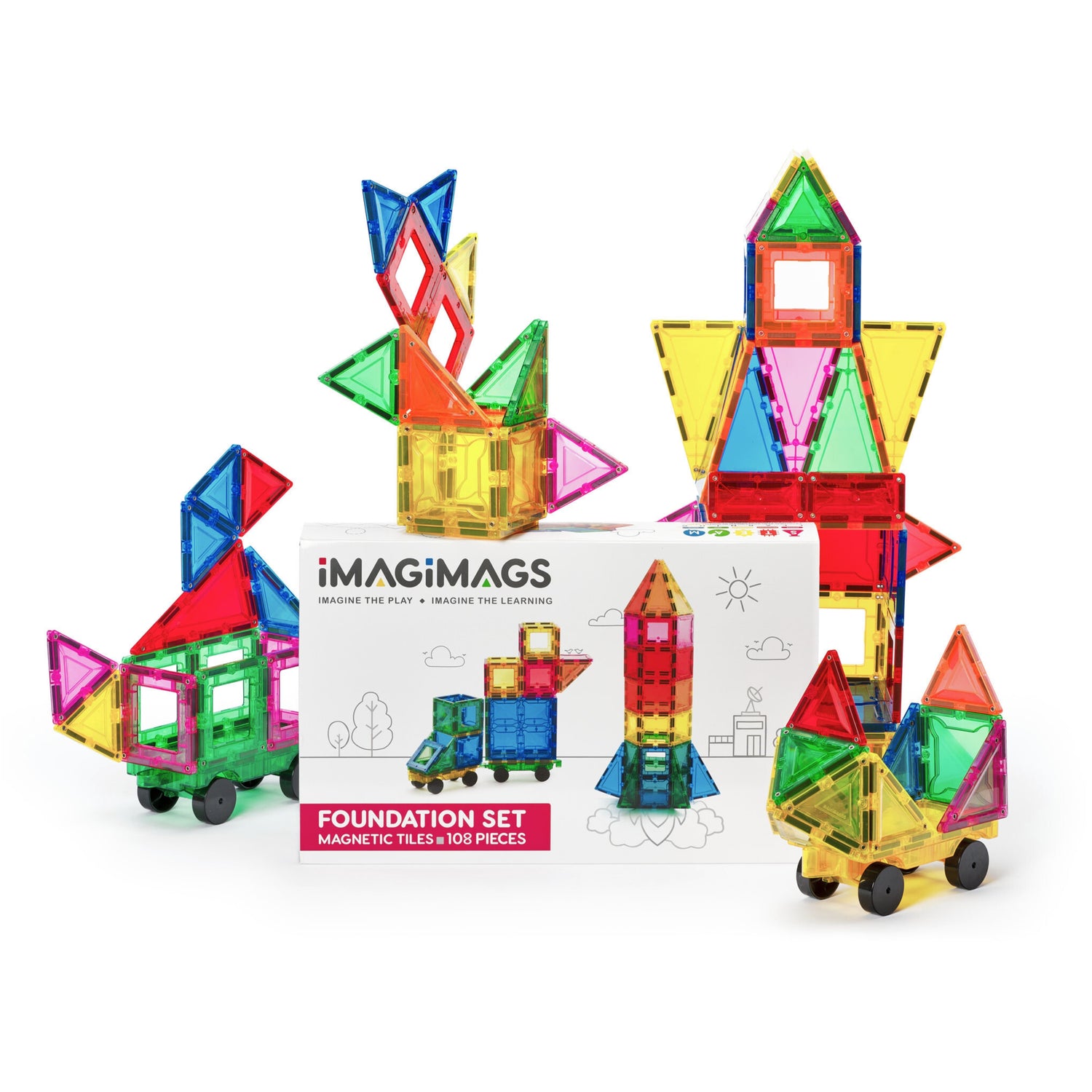
I see this play out in my own home every day. I have two children, ages 5 and 6, who are currently obsessed with their Imagimags. They spend ages engineering rockets, cars, and elaborate houses, and they have recently discovered the joy of sticking them to our metal door frames. Not only is it amazing for their imagination, but it creates priceless, screen-free time for us to connect.
From a developmental standpoint, what I value most is the social-emotional work happening beneath the surface. Open-ended play provides a natural sandbox for them to learn conflict resolution. When you have two kids building in close proximity, accidents are inevitable. These tiles give my children the daily opportunity to practice extending grace to one another when a meticulously crafted, rainbow-colored house gets knocked down by a stray foot. They have to regulate their frustration, communicate, and figure out how to rebuild together.
Redefining Value in a "Disposable" Culture
We are surrounded by a "disposable toy culture", flashy, battery-operated items that do one specific trick, hold a child’s attention for an afternoon, and inevitably break within a week. Admittedly I still have one or two on my workbench that I plan to fix…..one day…maybe.
But this is where the true value of an open-ended, durable toy like Imagimags stands out. Because they do not come with rigid instructions, they grow with your child's evolving cognitive abilities. A toddler might sort them by color, a preschooler might build a sprawling garage, and an older child might engineer complex geometric structures. To lean into an old cliché, a high-quality, open-ended toy truly is the gift that keeps on giving, because it respects a child's intelligence and leaves the storytelling entirely up to them.
The next time you see your children entirely absorbed in building on the floor, you don't need to feel guilty for taking a moment for yourself. You aren't just looking at a mess, you are witnessing architects, problem-solvers, and emotional learners hard at work.
Pour yourself a coffee, and let them build.
Dayne Williams (Educational Psychologist)
https://daynewilliams.co.za/